



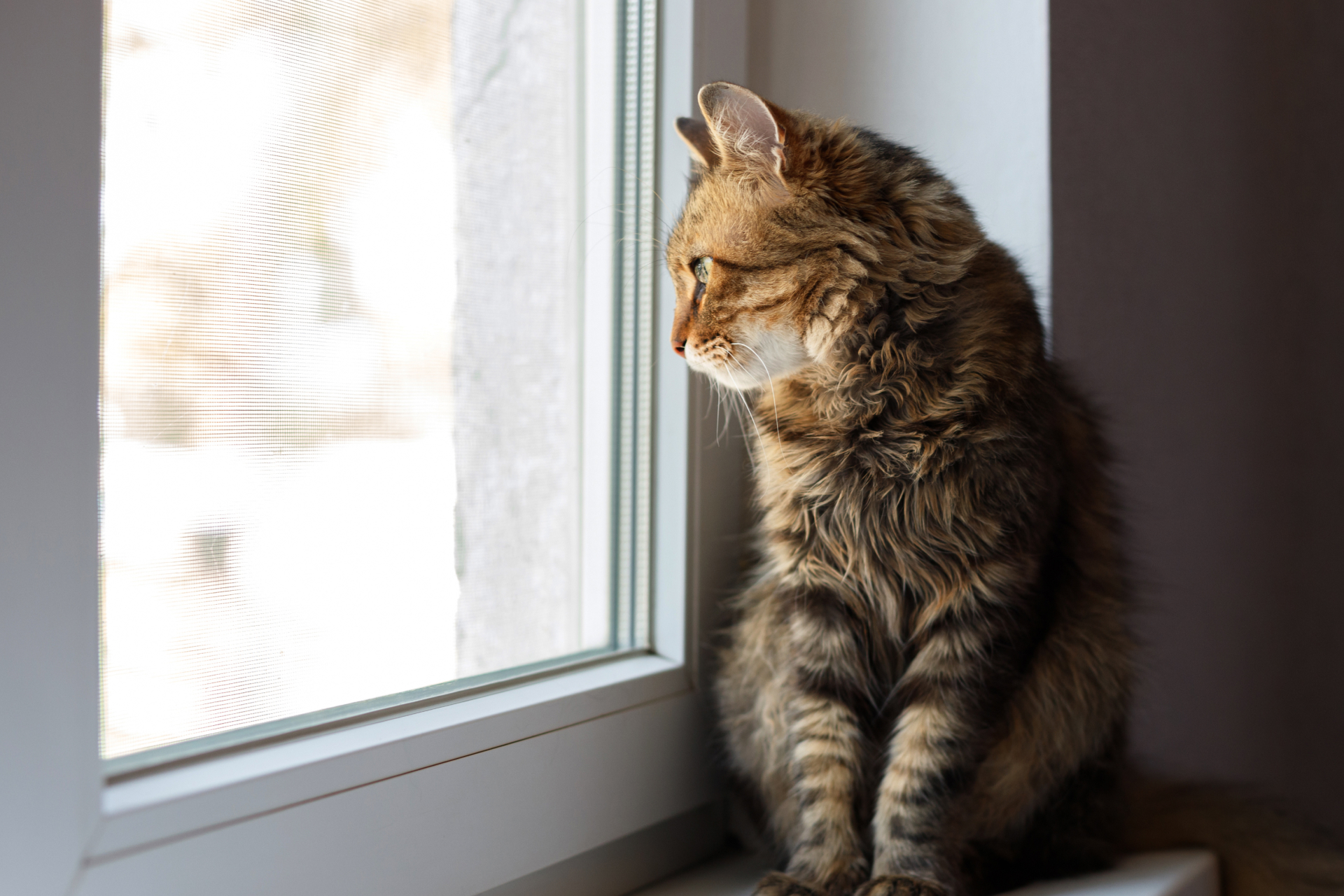
As the weather warms up, there’s nothing like cracking a window to let in a fresh breeze. But if you live in an apartment or a multi-story home, you may not realize that an open window presents a unique risk to our feline roommates. While we often think of cats as masters of balance who always land on their feet, even the most agile kitty can lose their footing. There’s even a term for it: high-rise syndrome, which refers to the injuries sustained when a cat falls from a significant height, like a window, balcony or fire escape. Learn more about how to prevent high-rise syndrome in your home.
It is a common misconception that cats jump on purpose. In reality, the causes of high-rise syndrome in cats are almost always accidental. Cats have an incredible hunting instinct; when they see something moving outside, the focus can become so intense that they lose track of where their paws are, leading to a slip. Additionally, cats can be easily startled by loud noises inside the home, causing them to bolt toward an open ledge without realizing the danger.
“High-rise syndrome in cats occurs most often during the warmer months when pet parents are more likely to leave windows open,” Dr. Aliya McCullough, Fetch’s Chief Veterinary Officer, says. “Because cats have a righting reflex that allows them to land on their feet, they may survive falls, but the impact often leads to serious internal and skeletal injuries.”
If the unthinkable happens and your cat falls, it’s crucial to seek veterinary care immediately — even if they appear to be fine. The symptoms of high-rise syndrome in cats aren't always visible to the naked eye. While you’d likely notice limping or broken bones, many of the most dangerous issues happen internally. These can include a collapsed lung, internal bleeding or dental trauma from the chin hitting the ground upon impact. Because cats are experts at hiding pain, they may seem calm while experiencing a medical emergency.
The good news is that this condition is entirely preventable. Understanding how to protect your cat from high-rise syndrome starts with securing your living space. Don’t rely on standard window screens alone; many are designed to keep bugs out, not to keep a determined 10-pound cat in. Cats can easily pop a flimsy screen out of its frame or tear through the mesh with their claws.
“Even a fall from a second or third story can be devastating,” Dr. McCullough explains. “Preventive measures are the best way to ensure your cat stays safe while still enjoying the sights and smells of the outdoors.”
By taking a few minutes to cat-proof your windows and balconies today, you can enjoy the summer breeze with total peace of mind, knowing your curious climber is safe and sound inside with you.


The Dig, Fetch Pet Insurance's expert-backed editorial, answers all of the questions you forget to ask your vet or are too embarrassed to ask at the dog park. We help make sure you and your best friend have more good days, but we’re there on bad days, too.
Save up to 90% on unexpected vet bills
Use any veterinarian in the U.S. or Canada
Rated 'Excellent' on Trustpilot
The most comprehensive pet insurance


up to 90% of vet bills – covered.
Every 6 seconds, a pet parent gets a $1000+ vet bill. Care for your pet & your wallet with Fetch.
Get your price


