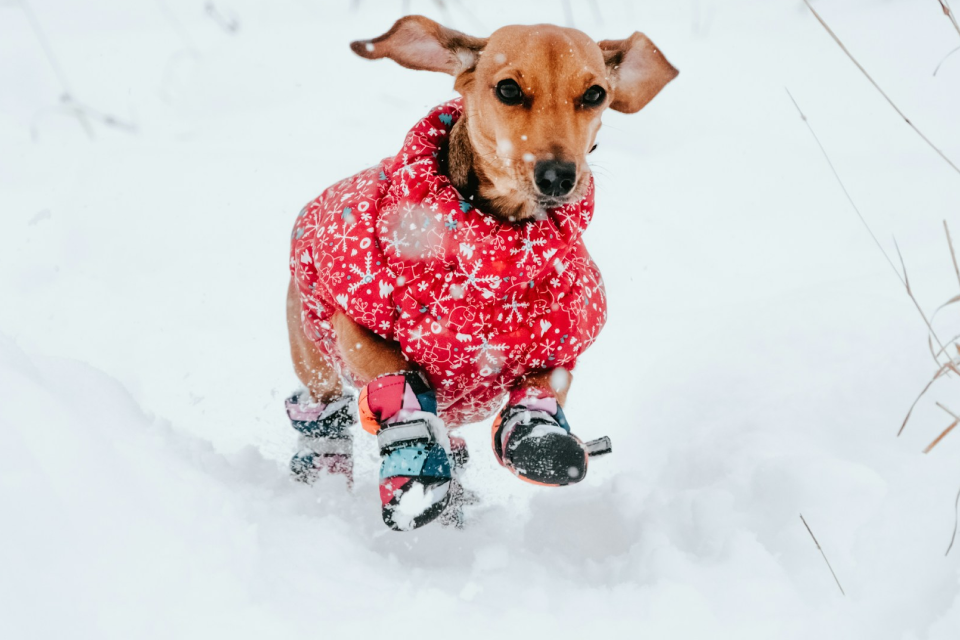
When temperatures drop and sidewalks get icy, you might wonder if your dog's paws need extra protection. While dogs have naturally tough paw pads, winter conditions can create hazards that even the hardiest paws weren't designed to handle. Whether your pup needs boots depends on several factors — from where you walk to your dog's individual characteristics.
Your dog's need for boots often depends less on the temperature and more on the walking conditions. Urban environments pose particular challenges during winter months. Salt and chemical deicers used on sidewalks and roads can cause painful chemical burns, cracking and irritation to exposed paw pads. These substances stick to paws and continue causing damage even after you've headed inside — and if your dog licks them off, they risk ingestion-related health issues too.
Sharp ice presents another concern. They can slice through paw pads just like broken glass. Meanwhile, packed snow can form painful ice balls between your dog's toes, especially if they have longer fur in those areas. Boots create a protective barrier against all these winter hazards.
Watch for these telltale signs that your dog's paws are struggling with winter conditions:
"Dogs communicate discomfort through their behavior," Dr. Aliya McCullough, Fetch's Chief Veterinary Officer, explains. "If your dog suddenly changes their walking pattern or is reluctant to go on winter walks, their paws may need more protection."
Some dogs are naturally more vulnerable to winter paw injuries. Small breeds, short-haired dogs, elderly pups, dogs with mobility challenges and those with existing health conditions typically have less tolerance for cold surfaces. Dogs with minimal fur between their toe pads or those recovering from paw injuries also benefit from the extra protection boots provide.


Winter boots do more than just shield paws from salt and ice. They help prevent frostbite on paw pads during extended exposure to freezing temperatures. For older or arthritic dogs, boots provide valuable traction on slippery surfaces, helping to prevent falls and injury if they have mobility challenges. By keeping salt, ice and cold air away from paws, boots also help prevent chapped and cracked paw pads.
There's a practical bonus too — boots mean cleaner paws when returning home. No more salt trails through the house or time spent washing chemicals off dirty feet after every walk.
If your dog wears boots, make sure you inspect them regularly for rips and debris. Ensure they fit properly and your dog only wears them for short periods. Boots keep paws warm, but wearing them too long — or if they’re damaged — can cause discomfort and injury.
Not every dog takes to wearing boots, and that's okay. Balms and waxes made specifically for dog paws create a protective barrier against salt and moisture, though they won't guard against sharp ice or extreme cold like boots do. Apply a thin layer of these products before walks, focusing on the paw pads and between the toes.
You can also adjust your winter walking routine. Choose routes that avoid heavily salted areas when possible, and consider using pet-safe ice melt around your own property. After each walk, rinse your dog's paws with warm water to remove any salt or chemicals they've encountered. Keep the fur between their toes trimmed short to prevent ice ball formation, and check paw pads regularly for signs of damage.
Every dog is different, and what works for a Husky might not suit a Chihuahua. Consider your specific situation: Do you walk primarily on treated city sidewalks or natural trails? Does your dog show signs of paw discomfort in winter? Are you dealing with particularly harsh conditions or just occasional cold snaps? Talk to your vet, especially if your dog has mobility issues or is dealing with a health issue, to make sure you are prepared before heading out into the cold.
Winter boots aren't mandatory for every dog, but they're valuable protection for many. Whether you choose boots, balms or careful route planning, the goal remains the same — keeping your dog's paws healthy and comfortable throughout the winter months.
The Dig, Fetch Pet Insurance's expert-backed editorial, answers all of the questions you forget to ask your vet or are too embarrassed to ask at the dog park. We help make sure you and your best friend have more good days, but we’re there on bad days, too.
Save up to 90% on unexpected vet bills
Use any veterinarian in the U.S. or Canada
Rated 'Excellent' on Trustpilot
The most comprehensive pet insurance


up to 90% of vet bills – covered.
Every 6 seconds, a pet parent gets a $1000+ vet bill. Care for your pet & your wallet with Fetch.
Get your price