



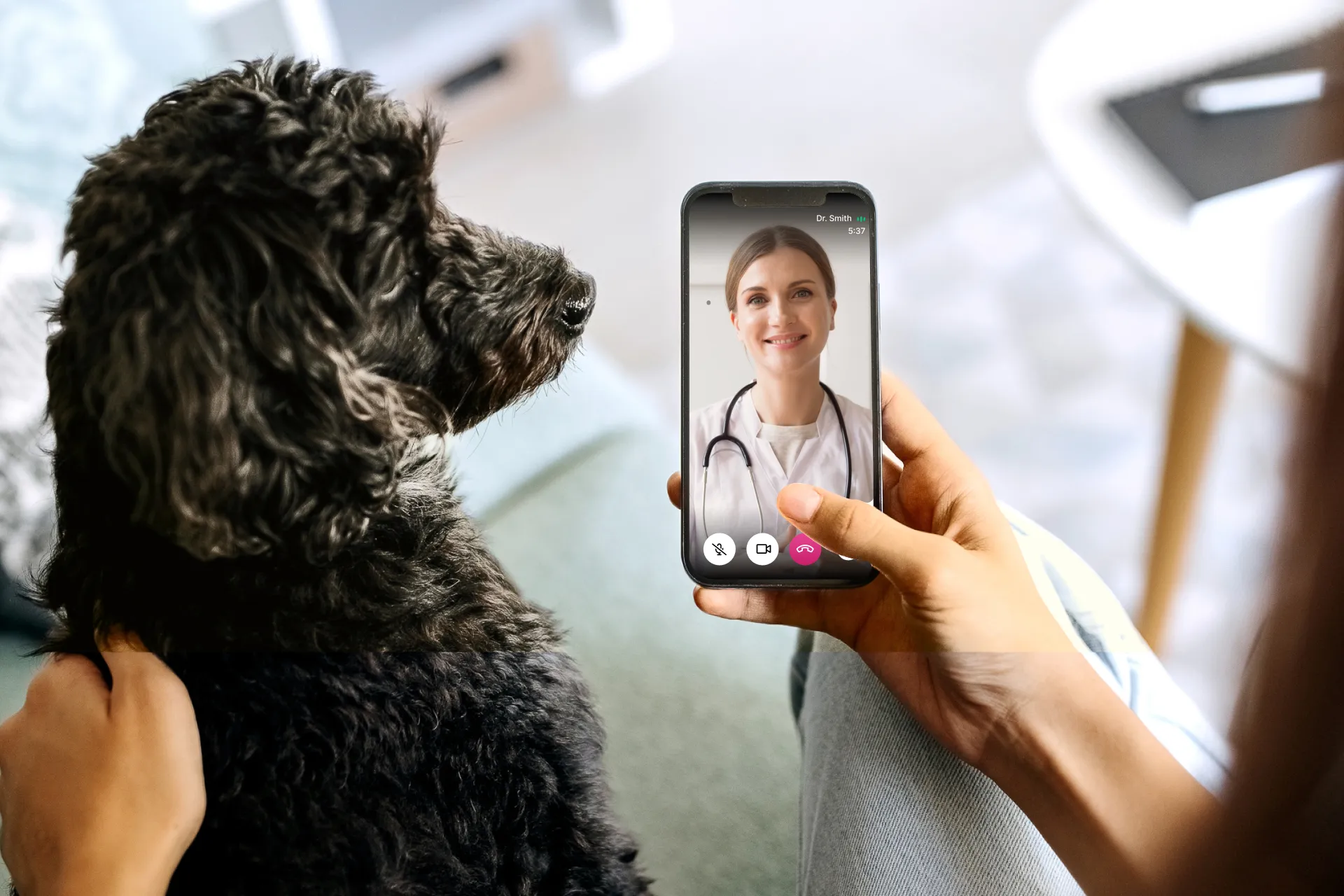
Caring for pets can be both rewarding and scary, especially when they are sick or injured. But how do you know when it’s time to go to the vet? If you’re not sure whether your pet is having an emergency or not, consider an online vet visit before loading a stressed animal into the car.
While an in-person visit may still be necessary, a telehealth visit can provide:
Pet parents often have to be detectives because dogs and cats hide their pain as a natural survival instinct (in the wild, showing weakness makes an animal vulnerable to predators). Being able to recognize the signs means looking for subtle and easily missed changes. If you notice any of these behavioral or physical shifts, your pet might be trying to tell you that something hurts:
1. Mobility and posture changes
While a severe limp is obvious, early signs of joint or muscle pain are much quieter. You might notice your dog or cat hesitating before jumping onto the couch or using the stairs. Watch their posture: a hunched back, tucked abdomen, slow movements or carrying their head unusually low can all be signs of somatic or visceral pain.
2. Shifting grooming habits
Pay attention to your pet's coat. Cats in pain (especially from arthritis or dental disease) often stop grooming themselves, leading to a dull, matted coat. Alternatively, both dogs and cats might excessively lick, bite or chew at a specific area on their body in an attempt to soothe localized pain. Look for rust-colored (saliva-stained) fur or missing fur only in areas your pet can reach.
3. Behavioral and mood swings
Think about how cranky you get when you have a headache — pets are the same way. A normally affectionate dog might suddenly avoid snuggles or isolate themselves, while a social cat might hide under furniture or in a closet. If your pet is unusually restless, aggressive or withdrawn, pain could be the reason.
4. Changes in daily routine
Pain can disrupt every aspect of your pet's day:
5. Vocalization differences
While some pets go entirely silent when they hurt, others become unusually vocal. Excessive panting (especially when resting), whimpering, crying or uncharacteristic meowing and even purring can all be distress signals.
Virtual veterinary visits offer value far beyond emergency care and acute illness. Telehealth serves as a convenient resource for routine wellness inquiries, nutritional guidance, routine behavioral follow-ups and managing long-term conditions like diabetes — all without requiring an office visit.
The bottom line: You know your pet better than anyone else. If your gut says they are acting "off," don't ignore it. Open your Fetch Pet Insurance app and connect with a professional right from home. Early detection not only resolves their pain sooner but can prevent minor issues from becoming major problems.


The Dig, Fetch Pet Insurance's expert-backed editorial, answers all of the questions you forget to ask your vet or are too embarrassed to ask at the dog park. We help make sure you and your best friend have more good days, but we’re there on bad days, too.
Save up to 90% on unexpected vet bills
Use any veterinarian in the U.S. or Canada
Rated 'Excellent' on Trustpilot
The most comprehensive pet insurance


up to 90% of vet bills – covered.
Every 6 seconds, a pet parent gets a $1000+ vet bill. Care for your pet & your wallet with Fetch.
Get your price


