

Pet insurance in New Hampshire for dogs & cats
Get your price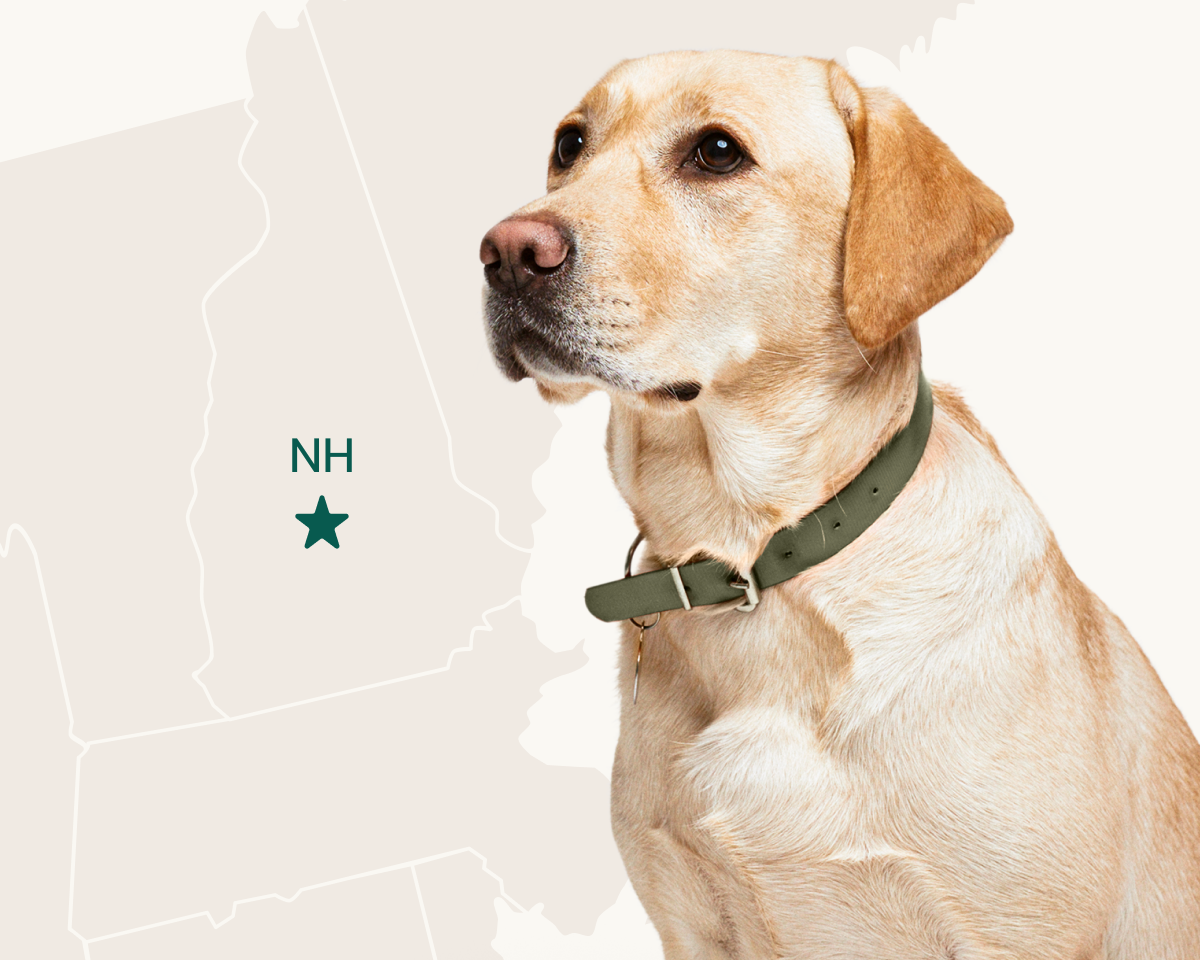
Labrador Retriever
Most popular breed in New Hampshire
How much does pet insurance cost in New Hampshire?
Fetch Pet Insurance costs $44/mo. for dogs and $35/mo. for cats in New Hampshire, on average. When you sign up with Fetch Pet, you’re getting the most complete pet insurance that covers more types of injuries and illnesses than other providers — and that peace of mind is priceless. There are plenty of activities in New Hampshire to keep pet parents busy, like walking the trails at Mine Falls Park in Nashua or taking your pup to visit the Dog Art Gallery in Portsmouth (yes, dogs are allowed inside!). New Hampshire’s lakes, forests and seasonal adventures are a big part of the reason why it’s a great place for pets, but exploring the great outdoors also increases exposure to health risks like ticks, harmful algal blooms and porcupine encounters. That’s why Fetch Pet pays back up to 90% of unexpected vet bills with the freedom to use any vet in the U.S. or Canada. Your pet and your wallet get the most complete protection with Fetch Pet, whether you’re in a big city like Manchester, a small one like Keene and everywhere else in between.
Fetch Pet Insurance is the most complete coverage for dogs & cats in New Hampshire
Fetch Pet provides the most complete coverage that includes what others charge extra for or don’t cover at all. This means you can get reimbursed for vet bills for accidents like broken bones and swallowed toys, illnesses like periodontal disease and diarrhea, plus much more. Fetch Pet also includes coverage for behavioral therapy, telehealth and injury and disease in every tooth, plus gums — not all providers do. With Fetch Pet, you can see any vet in the U.S. or Canada, including emergency clinics and specialty care, so you can give your pet their longest, healthiest life in New Hampshire and beyond.
Included coverage
Accidents

Emergency vet visits
Hospital stays
Cuts & scratches
Swallowed objects
Broken teeth
Broken bones
Bite wounds
Poisoning
Online vet visits
Illnesses
Sick visits
Vomiting & diarrhea
Skin & ear infections
Cancer treatment
Dental & gum disease
Allergies
Arthritis
Cherry eye
Breed-specific issues
Tests
X-Rays & CT scans
Physical therapy
Surgeries
Ultrasounds
Laboratory tests
Acupuncture & chiropractic care
Treatment for aggression & anxiety
Medications
Accidents, Illnesses & Tests
Emergency vet visits
Hospital stays
Cuts & scratches
Swallowed objects
Broken teeth
Broken bones
Bite wounds
Poisoning
Explore Accident & Illness

Optional coverage
Wellness
Accident and Illness pet insurance doesn’t include preventive care coverage. By adding it, you’ll also get money back for the vet visits that help keep your pet healthy, like:
Annual exams
Vaccinations
Spaying/Neutering
Dental cleanings
Heartworm, flea & tick prevention
Explore preventive add-on
Common pet health risks in New Hampshire
New Hampshire is made for adventures with your pet. You and your BFF can hike the trails of the White Mountains and Franconia Notch, take a dip in Lake Winnipesaukee or enjoy pet-friendly strolls on the Dover Community Trail and the Derry Rail Trail. Unfortunately, outdoor exploration can put pets in contact with dangerous elements like toxic algae, ticks and wildlife. Here are some of the most common risks to pets in New Hampshire and how much you’d get paid back with Fetch Pet’s most complete coverage.
Take a look at what a 90% reimbursement and a $300 deductible looks like in these examples:
What is West Nile virus?
West Nile is a virus that is carried by birds and transmitted by infected mosquitos. In some cases, it can spread and cause more serious neurological diseases like meningitis and encephalitis. Increased exposure to mosquitos increases the risk of contracting West Nile.
How West Nile virus affects pets: It’s rare for dogs and cats to get seriously ill from West Nile, but if the disease spreads through the bloodstream and becomes more serious, signs can include fever, lethargy, loss of appetite, weakness, difficulty walking, tremors or seizures.

Why pets in New Hampshire are at an increased risk
There are more than 40 species of mosquitoes in New Hampshire, and they are most active from June to October (when the weather is hotter and more humid) according to the New Hampshire Department of Health & Human Services. West Nile was first detected in New Hampshire in August 2000, and while activity changes from year to year, it has remained a consistent health risk in the state — along with other mosquito-borne illnesses like Eastern equine encephalitis virus (EEE).
West Nile virus
Fetch pays back: $365
Average cost to treat: $739


What are porcupine quill injuries?
A porcupine quill injury happens when a dog or cat gets too close to a porcupine and ends up with barbed quills stuck in its skin. Porcupines don’t shoot their quills, but they detach easily on contact as a defense mechanism — which is how other animals can get stuck with them.
How porcupine quill injuries affect pets: Porcupine quill injuries are more common with dogs than cats. Getting quilled is painful for pets, and the quills can migrate deeper into the skin, causing swelling and infection. If left untreated, buried quills can even travel to the chest and vital organs, so it’s best to get your pet to the vet as soon as possible.
Why pets in New Hampshire are at an increased risk
Porcupines live throughout New Hampshire’s forests, and each one carries about 30,000 barbed quills according to NH PBS. Dogs are most likely to run into a porcupine on wooded trails, at camp sites and in rural backyards in New Hampshire, especially at dawn and dusk when porcupines are active.
Porcupine quill injuries
Fetch pays back: $346
Average cost to treat: $718


What are toxic algal blooms?
Toxic algal blooms happen when cyanobacteria (sometimes called blue-green algae) grow fast in warm water that’s high in nutrients. Some blooms make toxins that can harm people and animals.
How toxic algal blooms affect pets: Dogs are at higher risk than cats because they’re more likely to swim in and drink from lakes and ponds. They can also swallow toxins when they lick their fur after a swim. Symptoms include vomiting, diarrhea, drooling, weakness, stumbling, trouble breathing and seizures. Ingesting water with cyanobacteria can be fatal for dogs according to the New Hampshire Department of Environmental Services. If you think your pet was exposed, rinse them immediately with clean water and take them to a vet as soon as possible.
Why pets in New Hampshire are at an increased risk
New Hampshire has over 800 lakes and ponds and approximately 19,000 miles of rivers and streams, according to the NH Department of Environmental Services. About 30 to 35 water bodies in the state have a toxic algal bloom each year, according to the New Hampshire Bulletin. While peak bloom season runs from May through October, some bodies of water, like Partridge Lake, have experienced algal blooms year-round. The best way to protect yourself and your pet is to check New Hampshire’s Healthy Swimming advisories before going in the water.
Toxic algal blooms
Fetch pays back: $282
Average cost to treat: $647


What are tick-borne diseases?
Humans and animals can contract tick-borne diseases when bitten by an infected tick. The black-legged (deer) tick can spread Lyme disease, anaplasmosis and babesiosis. Rocky Mountain spotted fever (RMSF) is transmitted by American dog ticks.
How tick-borne diseases affect pets: Dogs are more prone to tick bites but cats can get infected too. Symptoms often take weeks to appear and can include fever, lameness, swollen joints, lethargy, loss of appetite and, in some cases, kidney problems (in Lyme disease) or low platelet counts and bleeding (in anaplasmosis). Babesiosis attacks red blood cells and can cause anemia.
Why pets in New Hampshire are at an increased risk
Ticks are prevalent in New Hampshire because of its extensive forests, wildlife and warmer winters due to climate change. New Hampshire has one of the highest rates of Lyme disease in the country, according to the Centers for Disease Control and Prevention (CDC).
Tick-borne diseases
Fetch pays back: $237
Average cost to treat: $264


Deductible has been met in this example.
What is canine respiratory disease?
Canine infectious respiratory disease complex (CIRDC), commonly known as “kennel cough,” is a contagious illness that affects the respiratory tract in dogs. It’s caused by viruses and bacteria and can spread through close contact or shared items.
How canine respiratory disease affects pets: The most common sign of CIRDC is a frequent, honking cough. Other symptoms include sneezing, lethargy and a runny nose or eyes. Most dogs recover in 7-10 days, according to the American Veterinary Medical Association (AVMA).
Why pets in New Hampshire are at an increased risk
New Hampshire was one of the first states to experience a mysterious outbreak of CIRDC in 2023 before it spread across the country. Doggy daycares, shelters, groomers and dog parks are the most common places for spread, especially around summer travel and the holiday season.
Canine respiratory disease
Fetch pays back: $184
Average cost to treat: $538


What is canine distemper?
Canine distemper is a serious and highly contagious virus that attacks the respiratory, digestive and nervous systems of dogs.
How canine distemper affects pets: Unvaccinated puppies are most at risk for canine distemper. Early signs include fever, coughing, lethargy, vomiting and diarrhea. Later signs can include twitching, paralysis, seizures and hardening of the nose and paw pads. There’s no cure for canine distemper which is why vaccination is critical. (Cats don’t get canine distemper. Feline distemper, or panleukopenia, is a separate virus.)
Why pets in New Hampshire are at an increased risk
Distemper circulates in New Hampshire wildlife, and a new strain of canine distemper was identified in some wild animals in New Hampshire and Vermont in 2019.
Canine distemper
Fetch pays back: $105
Average cost to treat: $450


How claims & reimbursement work for pet parents in New Hampshire
It’s fast and easy to get reimbursed for approved claims with Fetch Pet.
1
You pay the vet first
You pay your pet’s bill in full at the veterinarian’s office during your visit.
2
Submit a claim to get paid back
Upload a picture of your paid invoice and supporting medical records and submit them in the Fetch Pet Insurance app.
3
Get reimbursed — fast
Claims are typically processed in less than 10 days. Once approved and you’ve met your deductible, get paid back up to 90% straight to your bank account when you set up direct deposit.
Get paid back for preventive care in New Hampshire with Fetch Wellness
When you sign your pet up for Fetch Pet, you have the option to add a Wellness plan to your pet insurance, so you’ll also get money back for vaccines, annual checkups, preventive oral care, spaying/neutering and more. With coverage for both unexpected and preventive vet care, your pet (and your wallet) will have total protection.
Get your price
Luca & Annette
Fetch Pet Members since 2023
Your New Hampshire pet insurance questions, answered
How much does Fetch Pet Insurance cost in New Hampshire?
Fetch Pet Insurance costs an average of $44/mo. for dogs and $35/mo. for cats in New Hampshire. For that price, you get the most complete coverage that includes what others charge extra for or don’t cover at all. When you get a quote with Fetch Pet, your price will be based on 3 factors: your pet’s age, breed and where you live in New Hampshire.
Does Fetch Pet Insurance cover pre-existing conditions in New Hampshire?
While no pet insurance covers all pre-existing conditions, Fetch Pet covers curable pre-existing conditions. These are medical issues that can be completely cured with no recurrence of signs or symptoms. (Think: urinary tract infections, burns and bite wounds.)
A pre-existing condition is any injury, illness or health condition that you or your veterinarian notice your pet has either before you sign up for Fetch Pet, before your policy’s effective date or during your waiting period of 15 days. To learn more, read about pre-existing conditions.
Is there a waiting period for pet insurance in New Hampshire?
With Fetch Pet, there’s no waiting period for accident coverage. This means pet parents in New Hampshire can start getting reimbursed for accidents the day after they sign up (also known as your “policy effective date” in insurance-speak) and going forward. There’s also no waiting period for Fetch Wellness coverage, if added. For illness coverage, there’s a waiting period of 15 days.
A pet insurance waiting period is the time between when you sign up and your bills are eligible for getting paid back. Any vet visits that take place prior to, or during the waiting period, will not be eligible for reimbursement.
Does Fetch Pet cover dental disease for pets in New Hampshire?
Yes, Fetch Pet covers dental disease in New Hampshire and everywhere else in the U.S. and Canada. Fetch Pet is the only insurance that covers injury and disease in all adult teeth and your pet’s gums. It’s why Fetch Pet was named Forbes’ “Best Pet Insurance for Dental Coverage” in 2026. Others limit dental coverage to the 4 canine teeth or don’t cover dental disease at all. Periodontal disease is the most common disease in dogs and cats, so having coverage for dental disease is crucial.
What are the biggest pet health risks in New Hampshire?
Some of the biggest pet health risks in New Hampshire include tick-borne diseases, West Nile virus, toxic algal blooms and porcupine quill injuries. Fetch Pet Insurance covers treatment related to all of these conditions and more with the most complete coverage for dogs and cats in New Hampshire and beyond.
What New Hampshire laws affect dogs and cats?
New Hampshire has various state-wide laws regarding rabies vaccinations, licensing and keeping your pet safe. To learn more about pet-related laws, visit the General Court of New Hampshire website. Other ordinances (like leash laws) are determined by individual cities and towns, so be sure to check out local community resources as well.
Where can I use Fetch Pet Insurance in New Hampshire?
There are no networks with Fetch Pet Insurance, so pet parents in New Hampshire can use any vet in the U.S. and Canada. This includes specialty care, emergency clinics and telehealth — you have the freedom to see any vet you’d like whether you’re at home, traveling or somewhere in between.
Is Fetch Pet Insurance available in Manchester and Nashua?
Yes, you can use any veterinarian in Manchester, Nashua and anywhere else in New Hampshire or throughout the U.S. and Canada with Fetch Pet Insurance. There are no networks, so you have the flexibility to see any vet you’d like — including telehealth, emergency clinics and specialists.
How does Fetch Pet Insurance compare to other pet insurance in New Hampshire?
If you’re looking for the best pet insurance in New Hampshire, that’s Fetch Pet — which includes what others charge extra for or don’t cover at all. Fetch Pet also covers more injuries and illnesses than other providers. Fetch Pet’s complete coverage includes:
- Accidents
- Illnesses
- Every tooth, plus gums
- Online vet visits
- Breed-specific conditions
- Medications
And much more!
Is Fetch Pet Insurance good value in New Hampshire given the premium?
Yes, Fetch Pet Insurance is good value in New Hampshire because you’re getting the most complete coverage for dogs and cats. In fact, Fetch Pet was voted #1 in the 2026 Newsweek Readers’ Choice Awards for Best Pet Insurance. We provide the best coverage at the best price for puppies and kittens and cover what others charge extra for or don’t cover at all. While others may look less expensive at first, their coverage will end up costing you more than Fetch Pet does. Here’s how: providers like Spot, Pets Best and Lemonade will give you a monthly price that looks low at first. But once you get closer to purchasing, they’ll ask if you want to pay extra to add coverage for dental, behavioral issues and more. Even with those add-ons, you’ll still have less coverage than what comes standard with Fetch Pet.